

Giving Stale Bread a Second Life
How a day-old loaf becomes breakfast for a crowd

Today's newsletter is in partnership with Too Good To Go (#TooGoodToGoPartner), a company whose mission I've admired — and whose app I've used — for years.

In every kitchen I’ve spent time in, stale bread has enjoyed a curious sort of prestige. I’ve learned that the best cooks see day-old bread not as an inconvenience but as a possibility.
At Ballymaloe, we transformed stale white bread into bread and butter pudding, each slice soaking up cream and eggs until there was no telling where the bread ended and the custard began. The raisins plumped, the sugar caramelized around the edges, and what had begun as yesterday’s loaf became the dessert equivalent of sinking into a faded floral couch — soft, comforting, perhaps unfashionable these days, but all the better for the nostalgia.
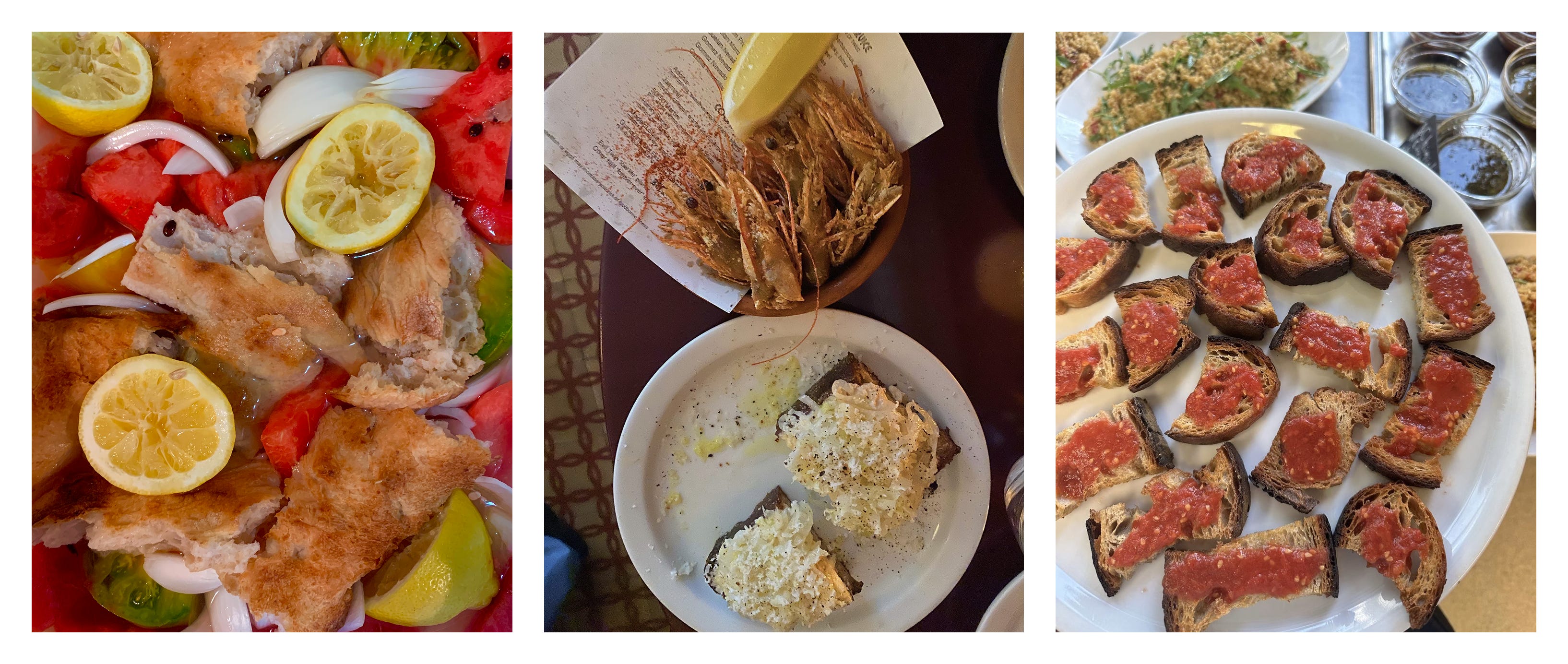
At Hart’s, leftover pizza bianca disappeared into salmorejo, a Spanish cold soup, with watermelon, tomato, onion, sherry vinegar, and olive oil. Yesterday’s sourdough was always chosen for clam toast because it fried more beautifully than a fresh loaf, becoming crisp without losing its chew. At Cervo’s, thick slices of day-old bread received the same treatment before being topped with tuna conserva. Stale bread was used not only to reduce food waste, but because it was actually better for the task at hand.
The Rome Sustainable Food Project was perhaps where this way of thinking became a habit. Every scrap of bread was diligently saved for breadcrumbs, then mixed into meatballs, used to coat arancini or cutlets, or toasted and scattered over pasta. Slices that had begun to harden were drizzled with olive oil and toasted into crostini. In summer, stale bread became panzanella, yielding to tomato juices and olive oil until it was neither crisp nor soft but something in between. Winter belonged to ribollita, a bean-and-vegetable soup thickened with hunks of stale bread until it became a meal unto itself.
These days, one of the stale bread recipes I return to most often is Deb Perelman’s kale and caramelized onion stuffing. I make it every Thanksgiving, though I’d happily eat it in February or on any ordinary Wednesday. Cubes of sourdough, preferably slightly stale, are revived with chicken broth and sherry, folded through sweet onions and garlicky kale, then baked until the top bronzes. The result is earthy, savory, and somehow luxurious despite the humble ingredients.
That same philosophy — seeing the culinary potential of leftover ingredients — is what drew me to Too Good To Go. The app lets you buy surplus food from local restaurants, bakeries, grocery stores, and other food businesses at a significant discount, saving perfectly good food from being thrown away. I’ve been a fan (and a user) for years, so I was delighted when they reached out to work with me. Whether it’s yesterday’s bread, surplus pastries from your neighborhood bakery, unsold bagels, or prepared foods from grocery stores, the idea is the same: good food deserves another chance.
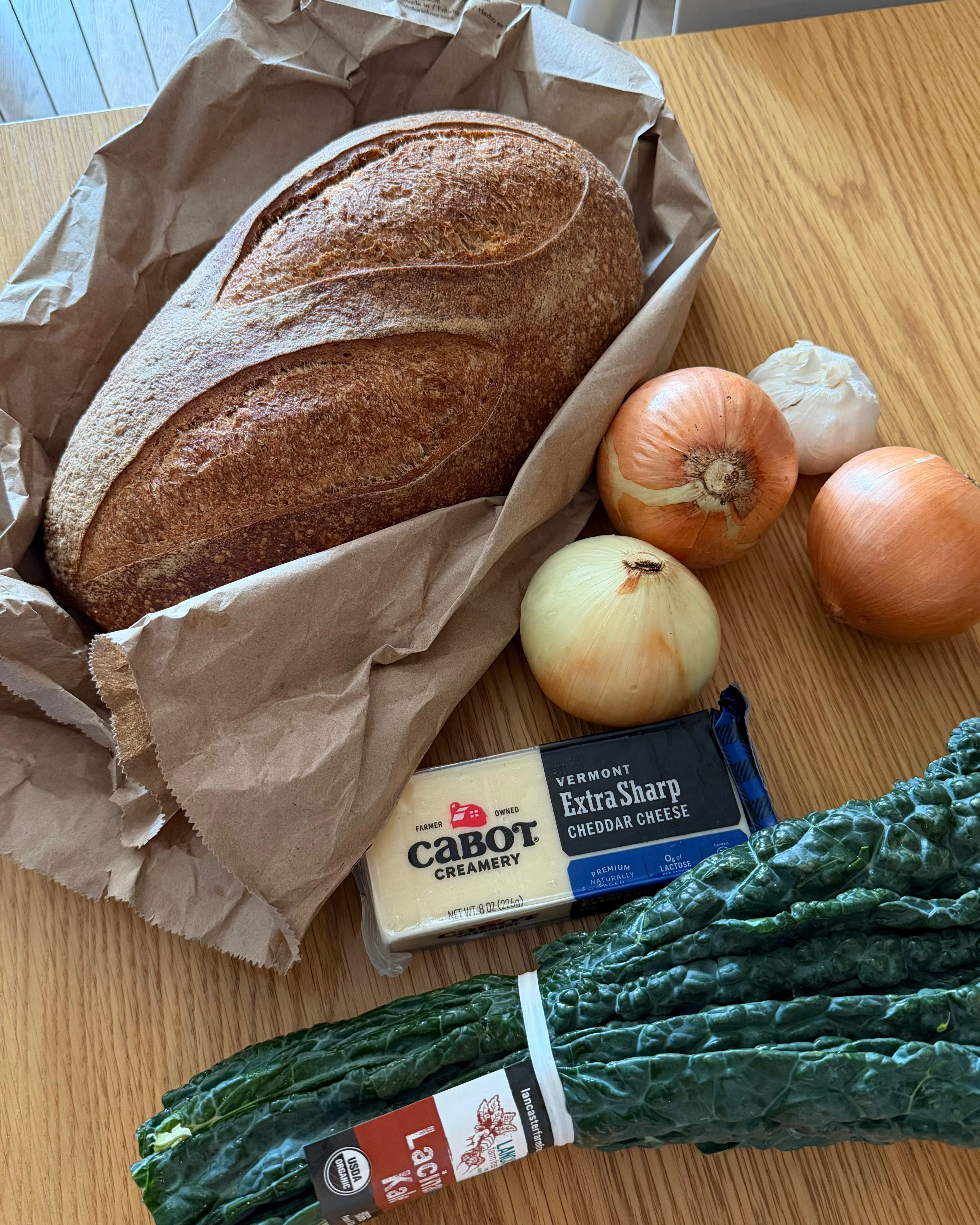
For the recipe that follows, I reserved a Surprise Bag from Bien Cuit through the Too Good To Go app and picked it up late one afternoon. Surprise Bags often contain an assortment of items, but to my delight, mine held a giant country loaf (weighing more than two pounds!) for a fraction of what it would have cost fresh. The funny thing was, it still felt fresh, springing back when I gave it a squeeze. It had almost certainly been baked that morning: too fresh to seem like yesterday's bread, but no longer fresh enough to command full price the next day. It was just what I needed.
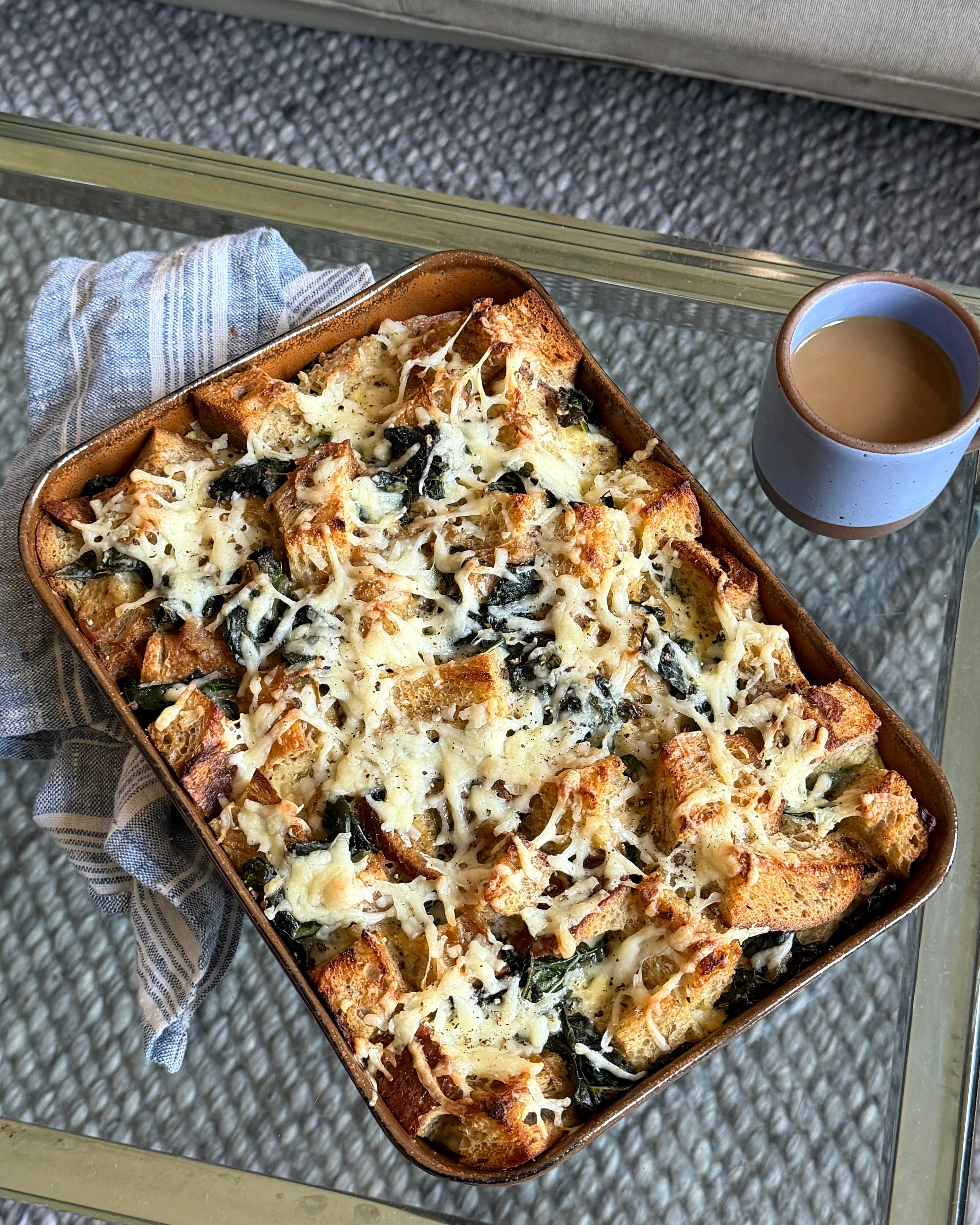
This recipe borrows from that kale and caramelized onion stuffing but takes it in a breakfast direction, strata-style. Cubes of day-old bread soak up a custard of eggs and milk before being baked until puffed, crisp-on-top, and tender in the center. It’s adaptable depending on what you have — greens, herbs, leftover roasted vegetables, cheese — and it’s one of my favorite ways to feed a crowd without spending much.
Take your Too Good To Go loaf, some eggs, milk, cheese, a couple of onions, and a bunch of greens, and you’ve got the makings of a beautiful brunch for eight for under $20. Not because you’re cutting corners, but because you’re cooking the way generations of resourceful cooks always have: by seeing abundance where others see leftovers.
Caramelized Onion & Greens Strata
Serves 8
8-10 cups day-old country or sourdough bread, cut into 1-inch pieces (about 1 pound)
2 tablespoons olive oil
2 large yellow onions, thinly sliced
Kosher salt and freshly ground black pepper
4 garlic cloves, minced or finely grated
1 bunch kale, stems removed and leaves chopped roughly (or substitute spinach or Swiss chard)
8 large eggs
2 cups whole milk
1 teaspoon Dijon mustard (optional)
½ teaspoon dried thyme (optional)
1 cup shredded cheddar
Head the olive oil in a large skillet or Dutch oven over medium-low heat. Add the onions with a generous pinch of salt and cook, stirring every few minutes, until deeply golden and jammy, about 30-40 minutes. Add the garlic and cook for another minute, until fragrant.
Stir in the kale with a splash of water. Cook until wilted, about 4-5 minutes. Season with salt and pepper and transfer to a large bowl. Let cool slightly.
Add the bread to the bowl and mix with the kale and onions.
Grease a 9-by-13-inch baking dish. Scatter the bread mixture evenly in the dish.
In the same large bowl (no need to clean it out), whisk together the eggs, milk, ½ teaspoon kosher salt, several grinds of black pepper, and the Dijon and thyme, if using.
Pour the custard evenly over the bread, pressing gently so every piece has a chance to absorb some liquid. Cover and refrigerate overnight.
The next day, heat the oven to 375°F. Sprinkle the cheddar over the top and bake for 35-40 minutes, until the custard is set and the top is golden. If it browns too quickly, loosely tent with foil for the final 15 minutes. And if you’d like extra browning, finish by broiling for a couple minutes.
Let the strata rest for 10 minutes before serving. Serve on its own or with a crisp green salad.
Budget Breakdown
Based on what I paid for these ingredients in NYC
Day-old bakery loaf (Too Good To Go Surprise Bag allocation): ~$3.26 (the Surprise Bag cost $6.52, and I used about half the loaf)
8 eggs: ~$4.33
2 cups whole milk: ~$1.55
2 yellow onions: ~$1.24
4 garlic cloves: ~$0.42
1 bunch kale: ~$3.00
1 cup shredded cheddar: ~$2.50
Pantry staples (olive oil, Dijon mustard, dried thyme): ~$1.00
Total: About $17.30 for 8 generous servings (about $2.16 per person).
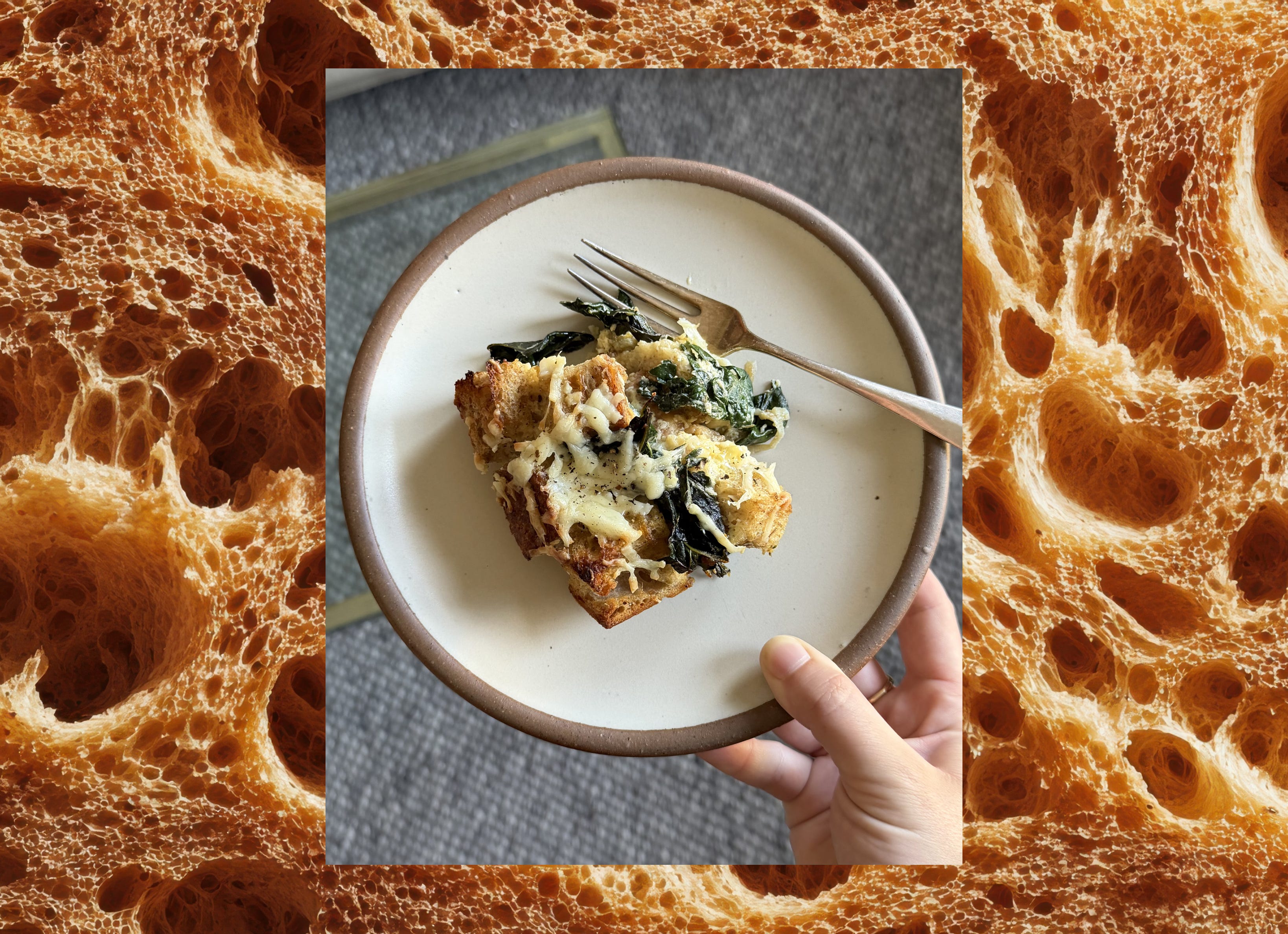
Thank you all for reading, and thank you, Too Good To Go!
Happy cooking,
Phoebs
Reading this, I'm back in my mother's kitchen in Chile, where stale bread never died — it was soaked, squeezed dry, and worked into fish croquettes, the crumb turning silky inside a crisp shell. Nothing was ever thrown away. She'd also turn it into colegiales — "schoolchildren" — a sweet pudding studded with raisins.
What I love about day-old bread is that it stops resisting. Fresh bread holds its shape, proud and intact — but stale bread surrenders, drinking in the custard, the broth, the tomato juices until it becomes something entirely new.
I need to make this strata!! There’s something to be said for garlicky homemade croutons, and having an on the brink loaf to dedicate to such a cause is a GIFT